Architecture & Superflat Space (Doctoral Dissertation, 2006-2009)
The dissertation examines Takashi Murakami’s neo-pop concept of Superflat, analyzes the Tokyo Omotesando brand stores identified by Tarō Igarashi as works of “superflat architects,” and situates these projects within a broader investigation of contemporary spatiality and surface aesthetics. It reframes the architectural envelope as an operative field of perceptual and material modulation—of light, texture, and affect—beyond moralized critiques of post-functionalist architecture or urban design orthodoxies. The final chapter speculates on digitally assisted modes of architectural production that redirect sensitivity and technical refinement away from attention-economy singularities toward more resilient and transferable architectural intelligence.

︎︎︎Dissertation
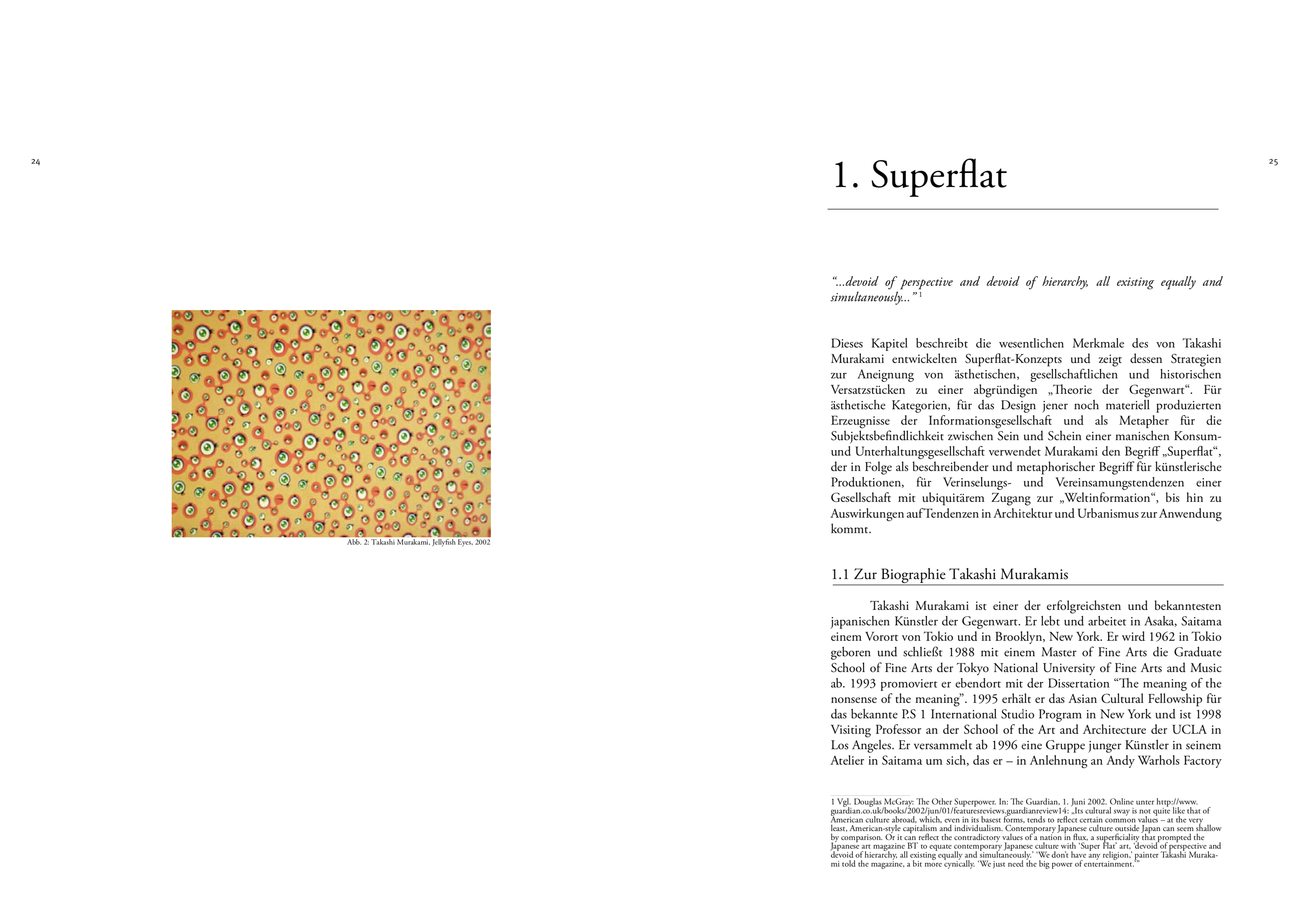
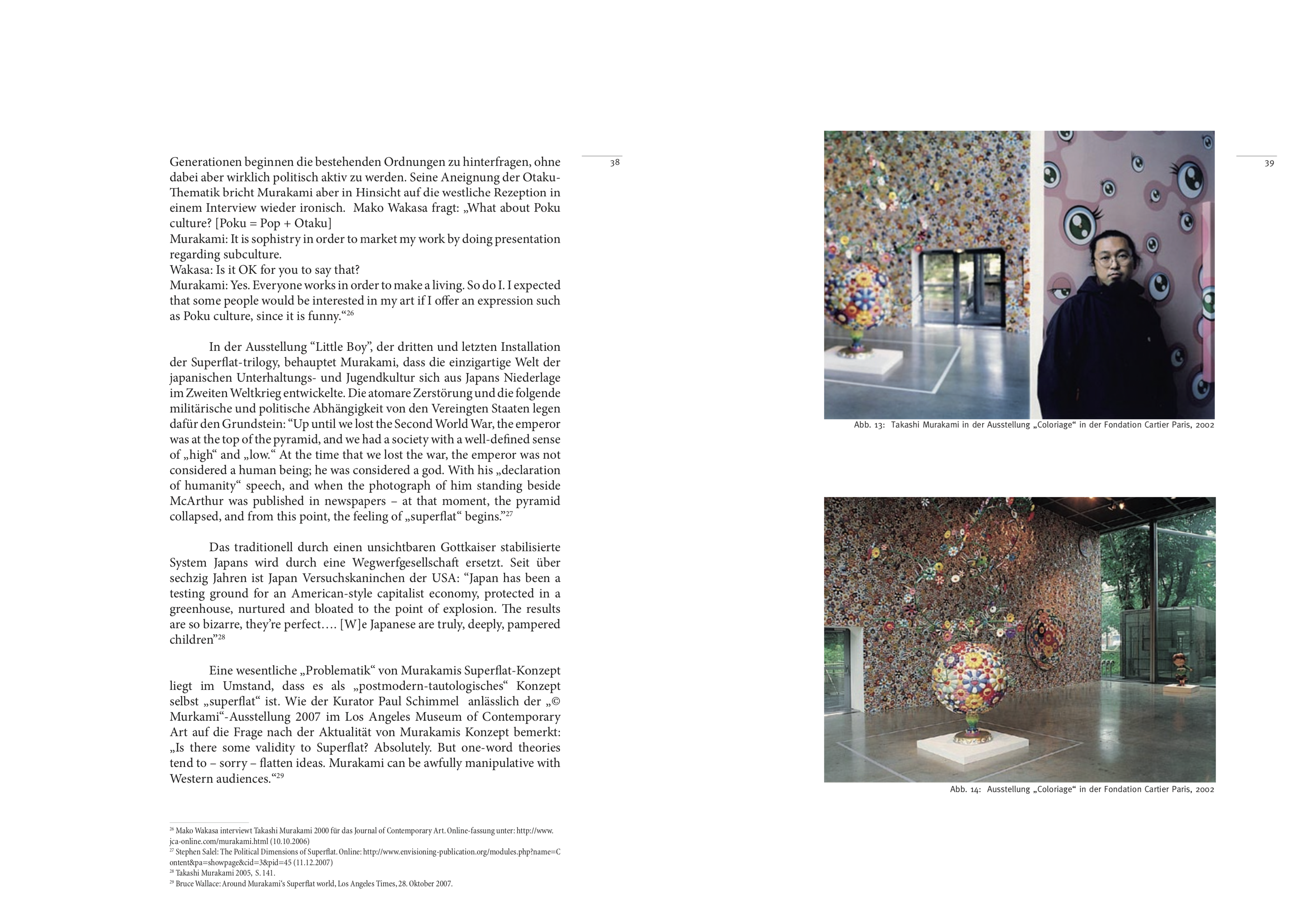
Superflat, conceived by the renowned artist Takashi Murakami (1962), serves as an artistic lens through which contemporary Japanese society and culture are interpreted. Both an aesthetic diagnosis and a cultural diagram of contemporary Japanese society, Superflat emerges at the intersection of postwar visual culture, consumer capitalism, and media saturation, Superflat articulates a persistent tendency toward planarity in Japanese art while simultaneously exposing the shallow depth structures of global cultural markets. Murakami’s work—particularly as it was strategically framed for Western reception in the early 2000s—became a catalyst not only within art and design discourse, but also for a broader reconsideration of how surfaces, images, and subjectivities are produced and circulated under late capitalism. This dissertation stems from a sustained engagement with that moment, sharpened through first-hand experience within a high-profile Tokyo studio, where architectural production revealed itself as increasingly entangled with branding, spectacle, and the economies of attention.


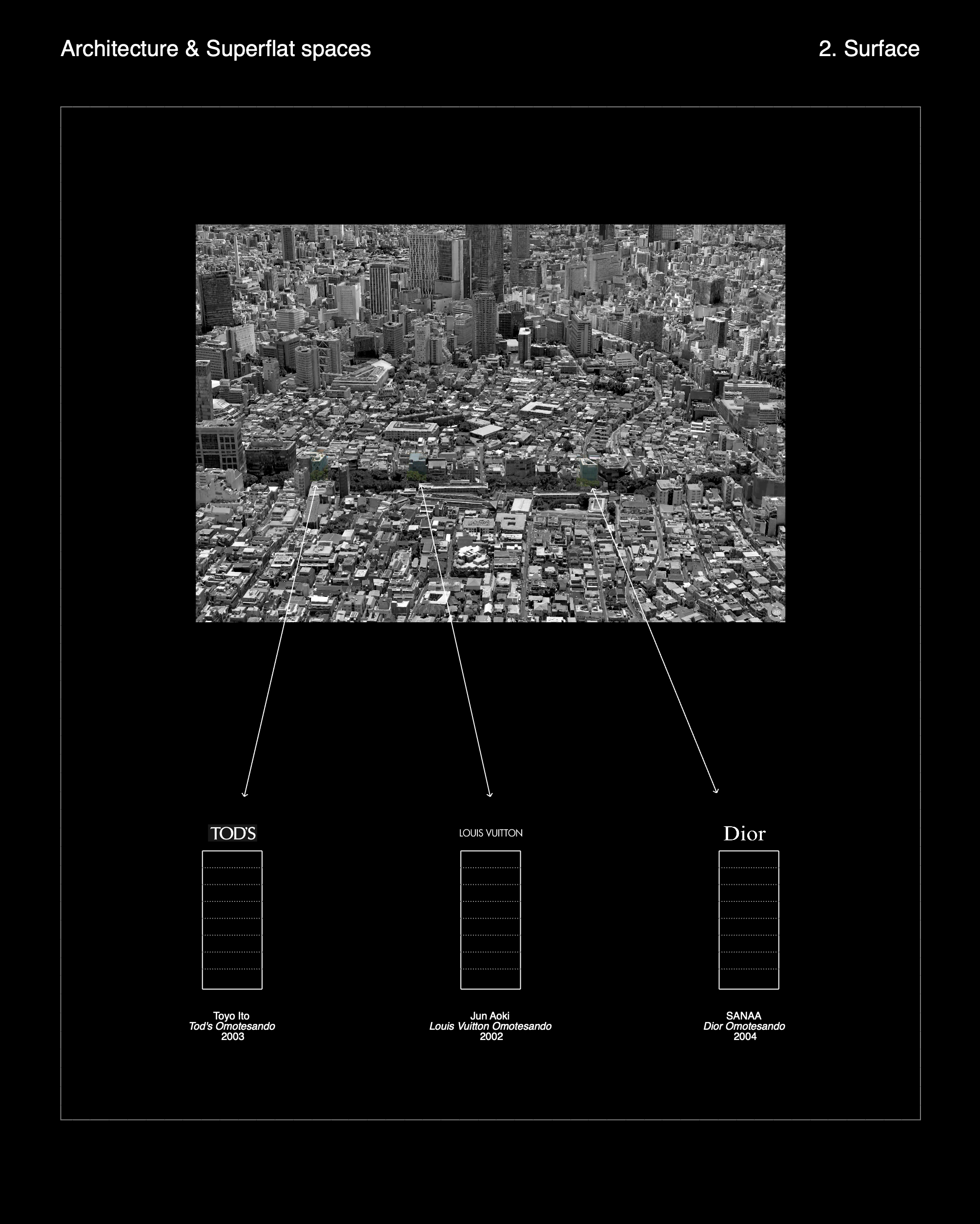


Rather than treating Superflat as a stylistic category or pop-cultural curiosity, the dissertation mobilizes it as an analytical lens through which architecture’s precarious position within creative industries can be critically reassessed. Superflat’s oscillation between two- and three-dimensionality, its privileging of surface over depth, and its affinity with the logics of digital culture resonate uncannily with contemporary architectural envelopes. Yet the project resists the crude translation of architecture into monumental image-surfaces—exemplified by reductive screen-like buildings such as the Chanel Ginza Building (Peter Marino Architects, 2006)—in which planarity collapses into mere visual consumption.
Instead, the three Omotesando brand stores analyzed in detail in chapter 2 embody what Tarō Igarashi has described as a superflat sensitivity: an architectural intelligence that treats the envelope not as a billboard, but as a dense field of modulation. Like a flat screen, these buildings operate simultaneously as fixed spatial constructs and as repositories of unrealized multiplicity—spaces defined less by depth and programmatic hierarchy than by gradients of light, texture, reflection, and perceptual ambiguity. Here, Superflat is neither celebratory nor ironic; it becomes a spatial condition in which architectural meaning is continuously deferred and recomposed.
This condition gains theoretical depth when read through Félix Guattari’s reflections on Japan as a prototypical site of contemporary capitalist subjectivation. Guattari’s observation that Japanese collective subjectivity fuses advanced high-tech systems with archaic, feudal, and animistic residues is not incidental but foundational to the dissertation’s argument. What emerges is a model of spatial production in which technological sophistication does not erase historical strata, but recombines them into flexible regimes of affect, perception, and control. Architecture, in this sense, becomes a medium of reterritorialization: not through form alone, but through the calibrated performance of its surfaces. The building envelope appears as a privileged site where subjectivities are subtly shaped—through atmosphere rather than representation, through modulation rather than symbolism.
Against this backdrop, the dissertation advances a critical position toward what might be termed refined luxury architecture. Rather than condemning luxury on moral or social grounds, the critique targets its disciplinary conservatism: the way in which enormous technical, material, and financial resources are routinely invested in the reproduction of inert prestige surfaces. Such architecture often perfects appearance while leaving the envelope functionally mute—thermally, energetically, and environmentally underperforming despite its visual refinement. In this sense, refined luxury architecture is revealed as a missed opportunity, a squandered concentration of intelligence that remains trapped within representational excess.
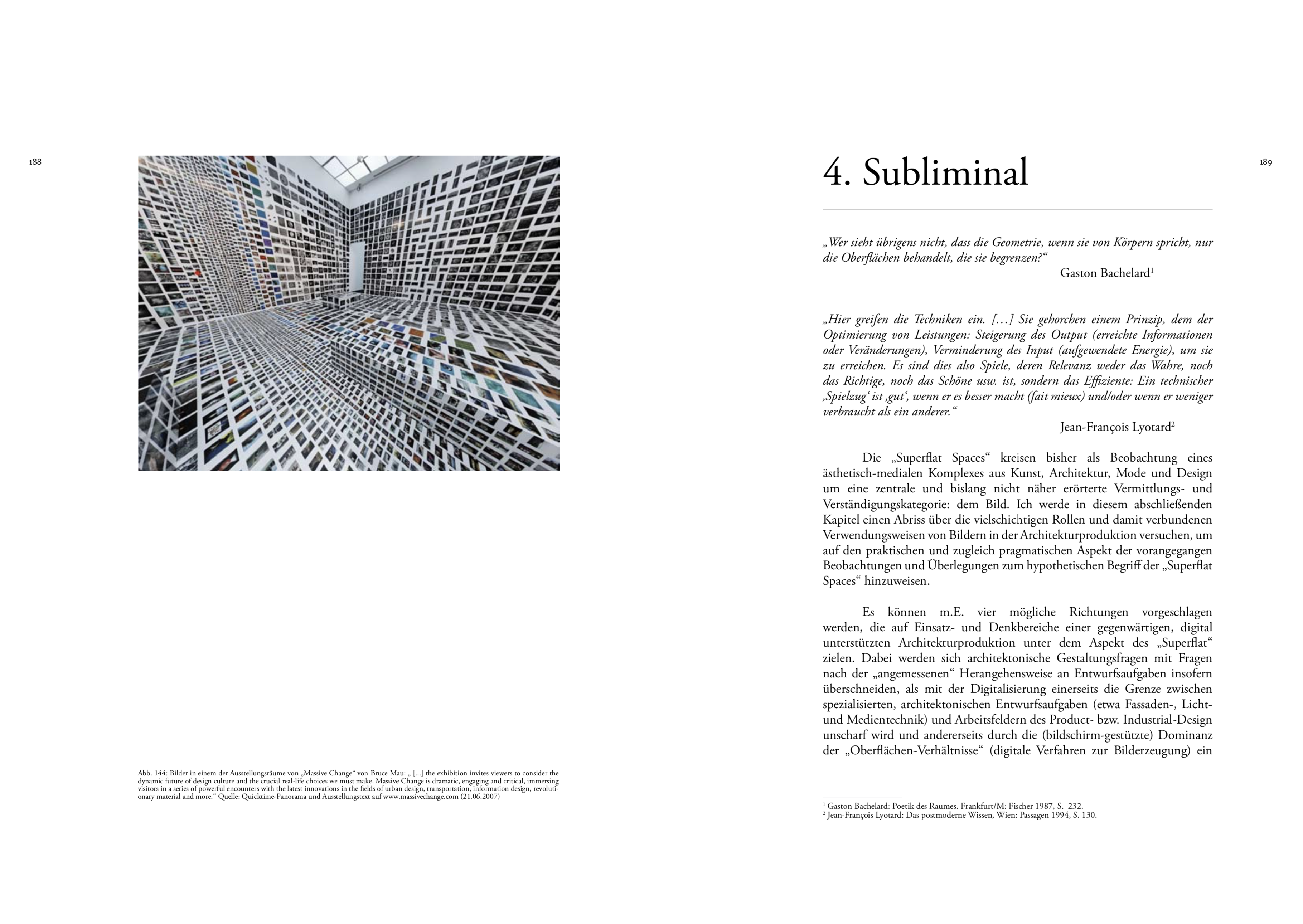
The fourth chapter therefore repositions Superflat not as an aesthetic endpoint, but as a methodological precondition for rethinking architectural production under digital and ecological constraints. Moving beyond the exhausted paradigms of non-standard geometry and singular starchitecture, the dissertation speculates on a convergence between Light Construction (as articulated by Terence Riley), digital simulation, and envelope research. Here, surface is no longer understood as image, but as an active interface—capable of harvesting energy, regulating climate, and mediating environmental exchange while remaining sensorially and perceptually rich.
In this reframing, Superflat becomes a productive paradox: a surface culture that, once stripped of its commercial cynicism, opens architecture toward a non-moralistic, non-iconic, and materially intelligent engagement with sustainability. The dissertation thus proposes that the very sensibilities cultivated in high-end architectural production—precision, control, and atmospheric refinement—could be redirected toward the development of energy-harvesting façades and performative envelopes. What is at stake is not the rejection of luxury, but its epistemological conversion: from symbolic excess to ecological competence, from visual flatness to operational depth.
"Look at Japan, the prototypical model of new capitalist subjectivities. Not enough emphasis has been placed on the fact that one of the essential ingredients of the miracle mix showcased for visitors to Japan is that the collective subjectivity produced there on a massive scale combines the highest of 'high-tech' components with feudalisms and archaisms inherited from the mists of time. Once again, we find the reterritorializing function of an ambiguous monotheism - Shinto-Buddhism, a mix of animism and universal powers - contributing to the establishment of a flexible formula for subjectification going far beyond the triadic framework of capitalist Christian paths/voices. We have a lot to learn!"
Felix Guattari, „Regimes, Pathways, Subjects“, in: Jonathan Crary / Sanford Kwinter, ed. Incorporations, Zone, vol. 6, New York: Zone Books 1992, p. 31.






Supervisor: Urs Hirschberg
ARCHITEKT ANDREAS LECHNER
Attemsgasse 11
8010 Graz
Austria
![]()
Attemsgasse 11
8010 Graz
Austria

Staatlich befugter und beeideter Ziviltechniker
© Andreas Lechner. All rights reserved. Unless otherwise stated, all materials on this website and the ideas incorporated herein, as an instrument of professional service, are protected by copyright and other intellectual property rights belonging to Andreas Lechner, its affiliates or its licensors and all such rights are hereby asserted and reserved. No part of this website may be copied, reproduced, republished, posted, transmitted or distributed in any way for commercial purposes. Any modification or use of the information contained on this website for any purpose not explicitly permitted without prior written consent is a violation of the author’s intellectual property rights and is strictly prohibited.
CV · Imprint
CV · Imprint